
Insect farming is being asked to deliver a lot: protein for animal feed, fertiliser from frass and a use for organic waste. Yet farmed insects are newcomers to domestication compared with livestock and crops, which have been shaped by generations of breeding. Genome editing offers a faster route to strains adapted to production, and the black soldier fly (Hermetia illucens) is one of the farmed insects where this route is now open.
What CRISPR-Cas9 does
CRISPR-Cas9 works like a pair of programmable molecular scissors. A short guide RNA takes the Cas9 enzyme to one chosen position in the genome, where it cuts the DNA. When the cell repairs the cut, small errors can switch the gene off (a knock-out). If a DNA template is supplied, a new sequence can be written in (a knock-in). Because the target is chosen in advance, the change is directed at the gene of interest instead of being scattered at random, as in classical mutagenesis.
A paler fly, on purpose
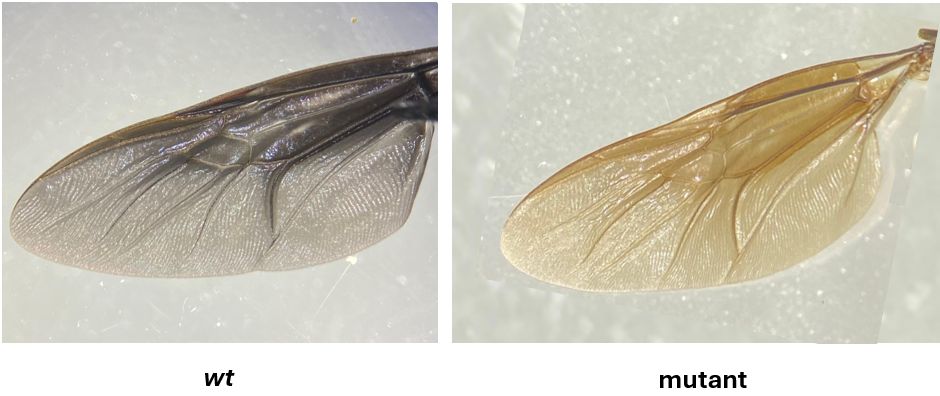
This summer, Pablo García Castillo, a PhD researcher at the Control Biotecnológico de Plagas (CBP) group of the Universitat de València whose thesis is co-supervised by Cucare Diagnostics, shared a striking result on LinkedIn: adult black soldier flies with a clearly lighter colour. The team used CRISPR-Cas9 to inactivate a gene involved in melanin synthesis, the pigment that gives the adults their dark colour. As Pablo noted, the flies did not get their new look from sunbathing.
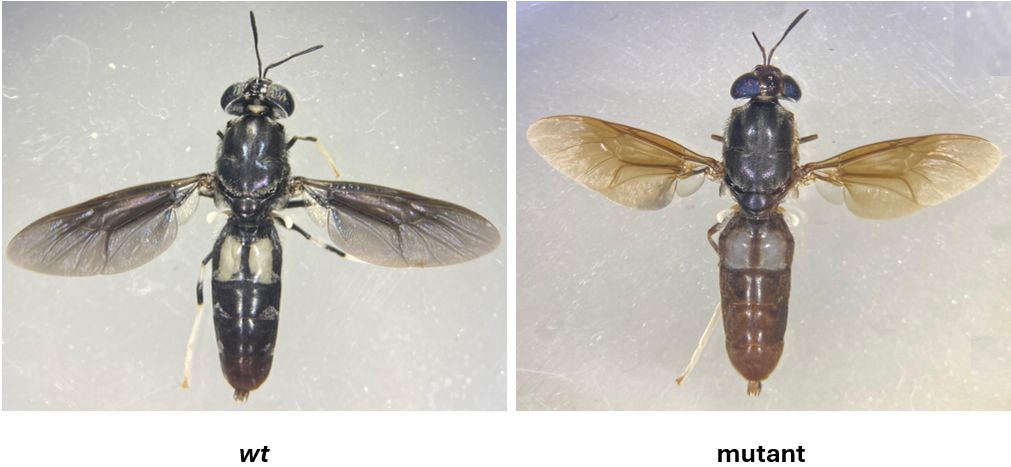
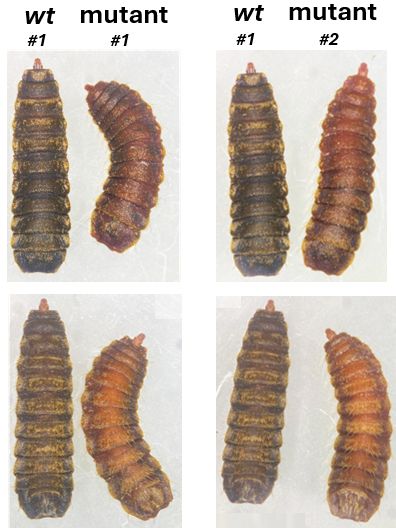
A change of colour may look cosmetic, but it is a meaningful milestone. Pigmentation genes are a common first target when editing is set up in a new species, because success can be checked by eye. The result shows that the whole workflow works in BSF: getting the editing tools into the insect, rearing the edited individuals and seeing the expected change in pupae and adults. According to the CBP team, it opens new lines of research and brings a more sustainable production of insect protein and other derived products one step closer.
What it means for insect producers
Once editing works in a species, the traits that matter in production can be studied and, in time, improved: growth, feed conversion, tolerance to rearing conditions or resistance to disease. Editing also lets research groups and companies test what a given gene does, which gives breeding programmes a firmer basis.
At Cucare
- Custom genome editing with CRISPR-Cas9, already applied in black soldier fly and in several species of Lepidoptera
- Gene knock-outs, knock-ins and marker lines, designed around your research or production question
- Rearing and maintenance of the edited lines
- Genetic analysis to support selective breeding programmes
Cucare co-supervises this PhD work and collaborates closely with CBP at the Parc Científic de la Universitat de València, where Cucare was founded as a university spin-off. Beyond BSF, we have used CRISPR editing in other lepidopteran species. If you are considering the genetic improvement of your insect strain, or need edited lines for research, we can help you plan the project, from the choice of target gene to the maintenance of the edited colony.
Thinking about editing or improving your insect strain? Write to us to discuss your project. More about our genetic services.